About Turkish Coffee Brewing
Turkish coffee is one of the oldest brewing traditions still practiced today, with roots that go back to the Ottoman Empire in the 1500s. It is made by simmering very finely ground coffee with water (and usually sugar) in a small handled pot called a cezve or ibrik. The unfiltered coffee gets poured directly into the cup, where the grounds slowly settle to the bottom. The cup is meant to be sipped slowly while reading the patterns of grounds left at the bottom is a long standing tradition in many cultures.
The standard ratio is roughly 1:8 to 1:12. That works out to one heaping teaspoon of extra fine ground coffee (about 7 to 8g) per 60 to 80ml of water per cup. The grind is essentially powder, the finest of any coffee preparation method. The fineness is fundamental to the way Turkish coffee works. The tiny particles stay suspended in the cup initially, creating that distinctive thick texture before the grounds finally settle.
Turkish coffee gets served in small quantities, similar in volume to espresso, and drunk slowly. The foam on top, called kaymak, is considered the most important part of the presentation. Traditional preparation involves carefully raising and lowering the heat to build foam without letting it boil over. A skilled Turkish coffee maker can be judged on the quality of the foam alone.
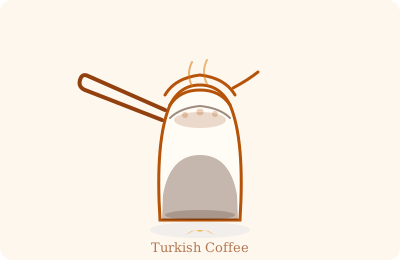
Brewing Authentic Turkish Coffee
The Grind Is Everything
Turkish coffee needs the finest grind of any brewing method, finer than espresso, close to powdered sugar or fine flour in texture. If your burr grinder does not have a Turkish setting, buy pre ground Turkish coffee or have it ground at a specialty shop. Some hand mills designed specifically for Turkish coffee have very tight burrs that get the grind right. Without the proper fineness the method does not work properly.
Cold Water, Not Hot
Start with cold water in the cezve. Add the coffee directly to the cold water, stir once gently, then place over low heat. The slow heating process is what allows the coffee to dissolve gradually and build the characteristic foam. Starting with hot water or rushing the heating prevents foam formation and changes the flavor in noticeable ways. Patience here pays off in the cup.
The Twice Heated Method
Traditional preparation involves bringing the pot almost to a boil twice. Bring it close to a boil on low heat until foam forms and starts to rise. Pull the pot off the heat just before it boils over, let the foam settle slightly, then put it back on the heat for a second rise. Pour immediately after the second rise. This method concentrates flavor and produces more stable foam than a single heat cycle.
Frequently Asked Questions
One heaping teaspoon of extra fine ground coffee per 60ml of water is the traditional guideline, which works out to roughly 1:8 to 1:10 by weight. For two cups, combine 14 to 16g of coffee with 120 to 140ml of cold water. Add sugar at this stage if you take it sweet: no sugar for sade (bitter), half teaspoon for az sekerli (medium), one teaspoon for orta sekerli (sweet).
Extra fine, finer than espresso. The texture should be close to powdered sugar or fine flour. This level of fineness is non negotiable for the method to work properly. Most home burr grinders cannot reach Turkish coffee fineness, so either buy pre ground Turkish coffee or use a dedicated Turkish hand grinder. Some Turkish brand hand grinders are specifically designed with very tight burrs for this purpose.
Use cold water in the cezve, add coffee without stirring at first, then give it one gentle stir before heating. Heat slowly over low heat. The foam forms as carbon dioxide trapped in the coffee releases during gradual heating. High heat prevents foam formation and causes the coffee to boil over instead. Fresh coffee makes better foam than coffee that has been sitting around for weeks.
During preparation, not after. Unlike most coffee traditions where you stir sugar in after brewing, Turkish coffee sugar is added to the cold water with the coffee before any heating happens. This means you commit to your sweetness level before you start. Bitter (sade), medium sweet (az sekerli), sweet (orta sekerli), and very sweet (cok sekerli) are the traditional categories you order in.
In caffeine concentration per milliliter the two are comparable. Both are concentrated brews served in small quantities. A 60ml Turkish coffee has roughly the caffeine content of a double espresso shot. The big difference is texture. Turkish coffee contains suspended grounds that keep settling as you drink, so the cup gets progressively thicker toward the bottom. The last sip is essentially mud and is not meant to be drunk.
Over boiling is the most common cause. Turkish coffee should come close to boiling but never reach a full rolling boil. Once it boils, extraction has gone past the optimal point and bitterness rises sharply. Use low heat, watch it constantly during the 3 to 5 minute brew, and pour as soon as the foam rises the second time. Old or stale coffee also tastes more bitter than fresh.
A small saucepan works as a substitute. The cezve is designed with a long handle and tapered shape that makes it easier to pour without disturbing the grounds at the bottom, and the small volume gives you better temperature control. A small saucepan with a pour spout achieves similar results but takes more careful pouring. The equipment matters less than getting the grind and technique right.
At least 2 to 3 minutes. The grounds need time to settle to the bottom of the cup before you start drinking. Drink too soon and you get a muddy texture and the coffee is uncomfortably hot. Pour slowly into the cup to avoid stirring up the grounds. Traditionally Turkish coffee gets served with a small glass of water alongside, which is meant to cleanse the palate before the first sip.
The Coffee Ratio Team
We're coffee enthusiasts who built the most accurate brewing ratio calculator on the web. Our formulas are calibrated to Specialty Coffee Association (SCA) standards.