About Espresso Brewing
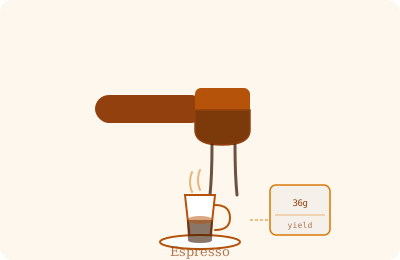
Espresso ratios work differently from every other brewing method. You are not measuring water in. You are measuring the ground coffee you load into the portafilter (the dose) against the liquid espresso you collect in the cup (the yield). A standard espresso is a 1:2 ratio, meaning 18 grams of ground coffee produces 36 grams of liquid espresso. That is how every specialty cafe in the world dials in their espresso.
The reason for this is that espresso machines push roughly 90 to 95ml of water through the puck under 9 bars of pressure, but most of that water gets absorbed by the grounds. Only the 36g or so that drips into your cup is what you actually drink. Total water in is not a useful number for espresso. Yield in grams on a scale is the only measurement that actually matters for shot consistency.
A ristretto is a shorter, more concentrated shot at 1:1.5, where 18g produces 27g. Many milk drink recipes use ristretto because the concentrated sweetness stands up to milk better. A lungo extends to 1:3 or beyond for a longer, less intense shot. None of these is objectively better. They are different flavor profiles for different preferences and different beans.
Dialing In Espresso at Home
The Variables You Control
On a home machine you control dose (how much coffee), yield (how much liquid you let pour out before stopping), and extraction time (related to grind size). A 1:2 espresso should extract in 25 to 30 seconds. Shorter than 20 seconds usually means the grind is too coarse and water is moving through too fast. Longer than 35 seconds usually means too fine. Adjust grind first to fix timing.
Why Weighing Output Matters
Eyeballing espresso by volume (counting seconds until the cup looks full) is unreliable because crema volume changes with every variable. The same shot pulled twice can look different in the cup but weigh exactly the same. Put a small scale under the cup. A cheap kitchen scale with 0.1g resolution is enough. This single change alone improves home espresso more than almost any equipment upgrade.
Pressure and Temperature
Standard espresso happens at 9 bars of pressure and 90 to 94 degrees Celsius water temperature. Home machines vary in how reliably they hit these targets. Thermoblock machines heat fast but fluctuate. Dual boiler machines hold temperature better. If your machine has a PID controller, set it around 93C as a starting point and adjust based on taste, not theory.
Frequently Asked Questions
The specialty coffee standard is 1:2, meaning 1 gram of ground coffee produces 2 grams of liquid espresso. A typical double shot uses 18g of dose and yields 36g of espresso. Ristretto is 1:1.5 (more concentrated, 18g in to 27g out). Lungo is 1:3 (longer, 18g in to 54g out). All three are valid styles, just different concentrations.
Because most of the water the machine pushes through the puck gets absorbed by the coffee grounds and never makes it into the cup. Coffee absorbs roughly its own weight in water during extraction. What matters for flavor is how much coffee dissolved into the liquid you actually drink, which is captured by yield in grams. Total water in is not useful for dialing espresso.
25 to 30 seconds from first drip falling to stopping the shot. Under 20 seconds usually means the grind is too coarse and water is moving through too fast. Over 35 seconds usually means too fine or your puck is too dense. If your timing is right but the shot tastes off, look at dose and yield before changing grind.
A ristretto is a shorter espresso shot using the same dose but stopping the yield at 1:1.5 instead of 1:2. So 18g of coffee yields 27g of espresso instead of 36g. The result is more concentrated and often tastes sweeter with less bitterness. Many cafes use ristretto as the base for milk drinks because the concentrated flavor stands up to milk better than a standard shot.
Sour espresso means under extraction. Most likely causes are grind too coarse, extraction time too short under 20 seconds, or water temperature too low. Start by grinding finer. If that does not fix it, check that your shot is hitting 25 to 30 seconds, then try raising water temperature by a degree or two if your machine allows.
Bitterness usually means over extraction. Common causes are grind too fine, extraction over 35 seconds, or water too hot. Start by grinding slightly coarser. If your shot times are already in the 25 to 30 second range and it still tastes harsh, try lowering water temperature by a degree or pulling a slightly shorter yield (closer to 1:1.8 instead of 1:2).
No, not really. Real espresso requires 9 bars of pressure that only an espresso machine produces. A Moka pot makes strong concentrated coffee at about 1 to 2 bars of pressure. An AeroPress generates well under 1 bar from hand pressure. Both produce coffee that works in milk drinks and tastes great, but they are not espresso. Calling them espresso style is more accurate.
Start with your normal dose (say 18g) and a target yield of 36g (1:2) at your usual temperature. Pull a shot. If it runs too fast and tastes sour, grind finer. If it runs too slow and tastes bitter, grind coarser. Make one adjustment at a time and taste each result. New beans, especially when changing roast level dramatically, often need a meaningfully different grind setting.
The Coffee Ratio Team
We're coffee enthusiasts who built the most accurate brewing ratio calculator on the web. Our formulas are calibrated to Specialty Coffee Association (SCA) standards.