About French Press Brewing
French press makes some of the richest, most full bodied coffee you can brew at home. The method is simple. Coarse grounds steep in hot water for four minutes, you press the plunger down, and pour. No paper filter, so the natural oils that paper filters absorb stay in the cup. That oil and the small amount of fine sediment that slips past the mesh are what give French press its signature texture.
The standard ratio sits around 1:14 to 1:15. That works out to roughly 67 grams of coffee per liter of water, or about 14g per 200ml cup. This is stronger than the SCA Golden Ratio for filter coffee (1:16 to 1:18) for two reasons. The brewing is full immersion, so grounds stay in contact with water the whole time. And the grind is coarser, which extracts more slowly per gram, so you need a bit more coffee to get the same flavor density.
If you have never weighed your coffee before, start here. A 350ml single serve French press at 1:15 needs 23.3 grams of coffee. That kind of precision is hard to hit with tablespoons because grind size changes how coffee packs into a spoon. Get a kitchen scale. They cost ten dollars and they fix the biggest variable in your morning routine.
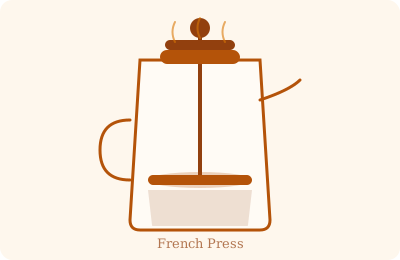
Getting the Most from Your French Press
The Bloom Step
Pour about 60ml of water (twice your coffee weight) over the grounds and wait 30 seconds before adding the rest. Fresh coffee will bubble and puff up as carbon dioxide escapes. This step is more important with beans roasted in the past two weeks, less noticeable on older coffee. Skipping it on fresh beans leaves you with uneven extraction.
Temperature and Steep Time
Water should be 93 to 96 degrees Celsius (200 to 205 Fahrenheit). Just off the boil works fine if you let your kettle sit for 30 seconds. Set a timer for four minutes. Under steeping gives you thin, sour coffee. Going past five minutes pushes you into bitter territory because extraction continues the entire time grounds sit in water.
The Press and Pour
Press the plunger down slowly over 20 to 30 seconds. If you have to fight the plunger, your grind is too fine. If it drops with no resistance, too coarse. Pour the entire press into your cup or a thermal carafe right away. Coffee left sitting on the grounds keeps extracting and turns bitter within a minute or two. This step matters a lot if you are brewing for two or three people.
Frequently Asked Questions
A full 1 liter French press at the standard 1:15 ratio needs about 67 grams of coffee. That is roughly 12 tablespoons of medium grind, though weighing is more accurate. For lighter coffee use 56 grams at 1:18. For something stronger drop to 1:12 and use 83 grams. Most people find 1:15 is a good starting point and adjust from there based on how strong they like their coffee.
Technically you can but it causes two real problems. The plunger mesh does not trap fine particles well, so the cup ends up gritty and thick. Finer grinds also extract faster, so a four minute steep over extracts and tastes bitter. Stick with coarse, around the size of coarse sea salt or the texture of cracked black pepper. Grind once and brew once. Do not pre grind for the week.
Three common causes. Water too hot above 96 Celsius pulls more bitter compounds out of the grounds. Steep time too long past 4 minutes does the same. Grind too fine increases surface area and accelerates extraction. A fourth common cause is leaving brewed coffee sitting in the press after pressing instead of decanting. Check your grind first, then steep time, then water temperature.
Yes if your coffee is fresh. Pour twice the coffee weight in water (so 45ml for a 22g dose), wait 30 seconds while the grounds release CO2, then pour the rest and start the four minute timer. The bloom shows you how fresh your coffee is. Beans roasted in the past two weeks puff up dramatically. Coffee older than three weeks barely moves and the bloom matters less.
Between 93 and 96 Celsius (200 to 205 Fahrenheit). If your kettle does not have temperature control, let boiling water sit for 30 to 45 seconds before pouring. Below 90C your coffee tends to taste flat and sour because extraction is incomplete. Above 96C you start pulling out more bitter compounds, especially with medium and dark roasts.
Some sediment is just part of French press coffee. To minimize it, use a coarse grind, press slowly, and let your filled cup sit for 30 seconds before drinking so any residual fines settle. The last 30ml in the press is always the most sediment heavy. Some people stop pouring before they reach the bottom. For nearly grit free results, look at metal micro filters from companies like Able Brewing that fit inside standard French presses.
Four minutes is the standard. This assumes coarse grind and water around 94 Celsius. If your coffee tastes weak at four minutes, try a slightly finer grind before going longer. If it tastes bitter, check your grind first (likely too fine) before shortening the steep. Five minutes is the upper limit before bitterness starts dominating.
Yes, and the French press makes a convenient cold brew vessel. Use a coarse grind and a 1:5 ratio for concentrate or 1:8 for ready to drink. Add cold or room temperature water, stir to wet all the grounds, and refrigerate for 12 to 18 hours. Then press and pour. For an even cleaner result, strain the pressed liquid through a paper coffee filter to catch the last of the sediment.
The Coffee Ratio Team
We're coffee enthusiasts who built the most accurate brewing ratio calculator on the web. Our formulas are calibrated to Specialty Coffee Association (SCA) standards.